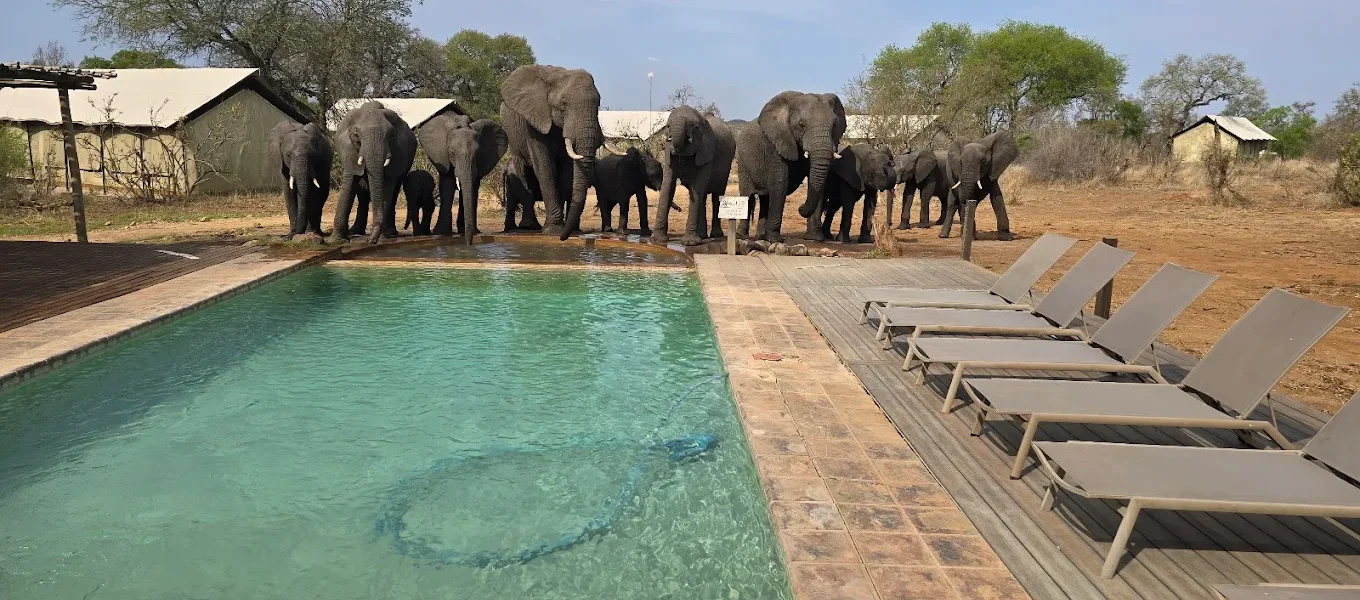
“Khoka Moya” translates from Tsonga as “draw close the spirit.” It is an apt name for a camp that does exactly that — drawing you into the spirit of the African bush through exceptional guiding, a beautifully considered luxury tented setting, and the kind of wildlife encounters that Manyeleti Game Reserve delivers with a consistency that far bigger-name reserves struggle to match. Honeyguide Khoka Moya Camp is one of the anchor properties of the Manyeleti Game Reserve and one of the most respected tented camps in the entire Greater Kruger ecosystem. If you have been looking at our 3-Day Honeyguide Khoka Moya Safari package and want a thorough picture of what to expect, this is the guide.
The Honeyguide Camps: What the Brand Stands For
Honeyguide is not a single camp — it is a safari brand with two properties inside Manyeleti: Khoka Moya Camp, the larger of the two, and the more intimate Mantobeni Camp nearby. Together they represent a philosophy of safari that puts guiding, interpretation, and the quality of the wildlife experience at the centre of everything, with the accommodation and hospitality built to support that rather than compete with it for attention.
The Honeyguide name is itself a reference to one of Africa’s most fascinating bird-wildlife relationships — the greater honeyguide, which leads humans and honey badgers to wild beehives by calling and flying in short bursts toward the hive, then returning to the observer. It is a behaviour that has evolved over thousands of years of mutual benefit. The choice of this name for a safari brand is deliberate: guiding, in the Honeyguide philosophy, is about genuine leading toward something meaningful, not the performance of expertise from a stationary vehicle.
This philosophy shows up most clearly in the quality of the rangers Honeyguide employs. The camp has a strong track record of developing guiding talent — rangers who stay with the operation for years, building deep knowledge of the specific terrain and animal populations of Manyeleti, rather than the rotating roster that higher-volume operations sometimes rely on. The guide you have on day one of your stay is the guide who will know, by day three, exactly which sighting to prioritise and why.
If you want to compare Khoka Moya with Mantobeni for a longer multi-camp stay, our 4-Day Honeyguide Mantobeni Safari covers the more intimate sibling camp in detail, and a combined itinerary across both is possible on request.
The Camp: Luxury Tented Design in the Manyeleti Bush
Honeyguide Khoka Moya Camp operates on the format that the very best African safari camps have refined over decades: luxury canvas tents on raised wooden platforms, each with a private deck, en-suite bathroom, and views directly into the surrounding bushveld. The tent format is a deliberate choice rather than a compromise. Canvas breathes and transmits sound in a way that permanent walls do not — you hear the bush from your bed. The night sounds of Greater Kruger — the distant whoop of hyena, the alarm call of an impala from the darkness, the occasional deep grunt of lion carrying across the still air — are not filtered or muffled. They arrive exactly as they are, which is part of the experience rather than an inconvenience.
The tents themselves are genuinely spacious — comfortable enough to qualify as luxury accommodation in any honest assessment, with proper beds, running hot water, and the kind of care in the details (lighting, linens, amenities) that a well-run safari camp provides without needing to advertise. The raised platform elevation gives each tent a clear view across the surrounding bush, and the private deck provides a personal space for early morning coffee or afternoon reading while watching the landscape for movement.
The communal areas of the camp — the boma, the main dining area, the fire — are where the Honeyguide experience consolidates itself. The boma fire at night, with the staff gathered and guests sharing the day’s sightings over dinner, has the quality that the best safari camps all share: a genuine atmosphere rather than a staged one. The food is consistently cited as a standout element of the Khoka Moya stay — well-prepared, generously served, and suited to the occasion of being in the bush in one of the great wildlife regions of Africa.
For travellers assessing whether a luxury tented camp or a permanent lodge structure better suits their style, our post on Luxury vs Mid-Range Lodges in Greater Kruger: What Do You Actually Get? gives useful context for understanding where the real experiential differences lie across accommodation formats.
Manyeleti: The Reserve Behind the Camp
Honeyguide Khoka Moya Camp’s position inside Manyeleti Game Reserve is central to what makes the camp work as a safari experience. Manyeleti’s 23,000 hectares sit at the geographical centre of the Greater Kruger ecosystem — bordered by Sabi Sands Game Reserve to the south, Kruger National Park to the east, and Timbavati to the north. The reserve’s open fencelines mean that wildlife roams freely across all of these boundaries, and the Big Five species you encounter during your game drives at Khoka Moya may have spent the previous night in Kruger or the previous week in Sabi Sands.
The defining characteristic of Manyeleti — the thing that experienced safari travellers most frequently cite when explaining why they chose it — is the low density of vehicles at sightings. Manyeleti operates with a strictly limited number of lodges and camps, and a system that caps the number of vehicles at any single sighting. Where Sabi Sands may have eight vehicles at a leopard sighting during peak season, Manyeleti will typically have two or three. This cap protects both the wildlife and the experience — animals behave more naturally with fewer vehicles present, and the quality of attention that a small group in relative silence can give a sighting is simply incomparable to the queue experience.
Our post on Manyeleti vs Klaserie: Authenticity, Vehicle Density, and Value Compared offers a direct comparison of these two underrated reserves for travellers who are deciding between them.
The Wildlife: What Khoka Moya’s Game Drives Deliver
A morning game drive at Honeyguide Khoka Moya begins before first light. Your ranger and tracker are already briefed on overnight sightings from the reserve network — the lion coalition that was vocal around midnight, the leopard that a neighbouring camp spotted at dusk on the south drainage line. The open-sided game vehicle moves through the camp perimeter and into the reserve’s network of game roads as the eastern sky begins to lighten.
Lion are among Manyeleti’s most consistent sightings. Several resident prides work the reserve’s terrain, and the Honeyguide guiding team maintains continuous awareness of their movements. Multi-vehicle coordination across the Honeyguide camps means that when a sighting is made, guests from other sessions can be directed to it efficiently. Three-night stays at Khoka Moya regularly produce multiple lion encounters across different drives and light conditions — from dawn patrols to late-afternoon territorial marking to hunts that begin as the day’s light fails.
Leopard are present throughout Manyeleti in good numbers, with the drainage lines and riverine vegetation providing ideal habitat for the most sought-after predator in any Greater Kruger sighting record. The Honeyguide rangers’ knowledge of individual leopard territories — and their relationship with the trackers who read their movements at ground level — means that leopard encounters at Khoka Moya are consistently more extended and more intimate than vehicle-heavy alternatives allow.
Elephant, buffalo, white rhino, giraffe, zebra, wild dog, hyena, and an exceptional range of plains game and birdlife complete the picture. Manyeleti’s habitat diversity — open woodland, drainage line forest, grassland, and rocky ridgelines — supports one of the widest species ranges in the Greater Kruger ecosystem, and three days at Khoka Moya gives you enough drives to sample all of it.
Before your first game drive, our Big Five Behavior Guide: How to Spot and Photograph Iconic Wildlife in Kruger covers the species knowledge that transforms every sighting from a visual encounter into a genuine understanding of the animal and its behaviour. And for photographers, our Photography Settings for Game Drives: A Greater Kruger Cheat Sheet covers every technical setting for the changing light conditions of a full safari day.
Off-Road Driving, Night Drives, and Guided Bush Walks
As a private reserve camp, Honeyguide Khoka Moya offers the three experiences that fundamentally distinguish a Greater Kruger private camp stay from a Kruger National Park game drive.
Off-road driving is the most immediately impactful. When your tracker spots fresh lion spoor leaving the road, the vehicle simply follows it across the open ground. This ability to track animals through habitat rather than waiting for them to appear on a paved surface changes the nature of every drive — your guide is conducting active, real-time wildlife detection rather than reactive observation. The difference shows in the quality and intimacy of sightings.
Night game drives open the nocturnal world that daylight misses entirely. Leopard are dramatically more active and visible after dark. Spotted hyena begin their territorial patrols. Smaller nocturnal predators — civets, genets, African wild cats — emerge in the spotlight beam. The atmosphere of a night drive through Manyeleti — the velvet darkness, the sounds that carry further in the cool air, the complete absence of light pollution — is one of those safari experiences that guests describe for years afterward. For an understanding of why night drives and bush walks complement rather than replicate a game drive, see our guide on Bush Walks vs Game Drives: Which Experience Is Right for You?.
Guided bush walks at dawn with a qualified field guide take the Khoka Moya experience to ground level. Walking in the Greater Kruger bush with a tracker who reads the landscape in real time — identifying which animal made each track, how recently it passed, where it was likely heading — creates an intensity of attention that no vehicle can replicate. The quality of Honeyguide’s guiding team makes the bush walk one of the strongest arguments for choosing Khoka Moya over less guide-focused alternatives in the reserve.
Who Is Honeyguide Khoka Moya Best Suited For?
Khoka Moya’s combination of luxury tented accommodation, exceptional guiding, and the Manyeleti wildlife environment makes it a strong choice across several traveller types.
First-time safari visitors who want to do this properly — with expert interpretation, proper activities, and accommodation that feels genuinely appropriate to the setting — will find Khoka Moya delivers the complete private reserve experience without the intimidating price tier of the most exclusive Sabi Sands properties.
Wildlife enthusiasts and photographers benefit from the Honeyguide guiding philosophy and the low vehicle density of Manyeleti more than almost any other traveller profile. Extended sightings, uncrowded game vehicles, and a guide who adapts the drive to your specific interests combine to make Khoka Moya one of the most photography-productive camps in the region.
Couples will appreciate the intimacy of the tented setting, the boma atmosphere, and the quality of a camp that creates connection with the bush rather than distraction from it. For a broader overview of romantic safari options in Greater Kruger, our Honeymoon in Greater Kruger: Romantic Bush Dinners, Star Beds, and Spa Time post covers the full spectrum of romantic experiences this ecosystem offers.
Groups of friends with a shared interest in wildlife will find the camp’s small size and communal boma atmosphere ideal — the evening fire and shared sighting stories create the kind of group experience that larger lodge formats cannot manufacture.
Getting to Khoka Moya: From Johannesburg and Cape Town
Honeyguide Khoka Moya Camp is accessible from Johannesburg by road in approximately five hours via the R40 and the Orpen Gate area of Kruger, with a turn-off to Manyeleti on the approach. Our 3-Day Honeyguide Khoka Moya Safari package includes all transfers from Johannesburg — collection, overland transfer, camp arrival, and return to the city.
Cape Town travellers should consider our 4-Day Cape Town to Manyeleti Fly-In Safari — a scheduled flight to Hoedspruit Airport with a road transfer to Manyeleti that eliminates the overland transfer entirely. This routing is the most efficient way to add a Greater Kruger private reserve experience to a Cape Town itinerary. Our Kruger Safari from Cape Town page covers all Cape Town departure options in detail.
For Johannesburg departure options across all formats and durations, see our Kruger Safaris from Johannesburg page.
Best Time to Visit and Pricing Context
Honeyguide Khoka Moya Camp operates year-round. The dry season (May to September) is consistently the best period for game viewing — thin vegetation, concentrated wildlife at water, and cool mornings that suit long bush walks and extended game drives. Lion and leopard sightings are most frequent and most sustained during this period. The shoulder months of April and October offer the best balance of sighting quality and competitive pricing.
For a full seasonal breakdown of how timing affects wildlife, pricing, and lodge availability across Greater Kruger, our Peak vs Shoulder Season in Greater Kruger: Crowds, Prices, and Sightings guide covers everything you need to plan your trip correctly. For transparent pricing context across different reserve and accommodation tiers, our Cost of a Greater Kruger Safari in 2026: Per Night, By Reserve, and By Season is the most complete reference available.
Other Manyeleti Options to Consider
Khoka Moya is one of several outstanding camps and lodges within Manyeleti Game Reserve. The 3-Day Pungwe Safari Camp offers a different atmosphere — more intimate and rustic — for travellers who want the authentic small-camp experience. The 3-Day Tintswalo Safari Lodge Experience and 4-Day Tintswalo Safari Lodge provide Manyeleti’s most formal luxury lodge option. And the 5-Day Manyeleti Explorer Safari builds a multi-camp experience across the reserve for travellers with five days to spend in this exceptional wilderness.
For the complete picture of all eight private reserves in the Greater Kruger ecosystem, visit our Greater Kruger page.
Three days at Honeyguide Khoka Moya Camp will not give you everything Manyeleti has to offer — no three days could. But they will give you enough to understand why the camp’s name is so fitting. Draw close the spirit of the bush, and let Khoka Moya do the rest.