When travelers first see an “inclusive” safari lodge rate, the assumption is simple: one price, everything covered. In practice, the picture is a little more nuanced.
At private safari lodges in the Greater Kruger region, inclusive rates are usually generous and well worth it, but they are not identical from one lodge to the next. One property may include all meals, selected drinks, two daily game drives, and a guided bush walk. Another may include the same basics but leave out conservation fees, premium drinks, and transfers. That difference matters when you are budgeting for a once-in-a-lifetime safari.
What inclusive safari lodge rates usually cover in Greater Kruger
At most private lodges, the nightly rate is built around the full safari rhythm of the day. You are not just paying for a room. You are paying for the full experience: early coffee before sunrise, a game drive with a guide and tracker, brunch back at camp, time to rest by the pool, high tea, an afternoon drive, sundowners in the bush, and dinner under the stars or in the lodge dining area.
The core inclusions are fairly consistent across many private reserves. Accommodation is included in the room category booked, usually quoted per person sharing. Meals are generally included from arrival through departure, depending on check-in and check-out times. Safari activities are often the real centerpiece, with shared morning and afternoon or evening game drives in open 4×4 vehicles forming part of the rate.
Many lodges also include selected beverages. That usually means house wines, local beers, soft drinks, juices, tea, and coffee. At higher-end lodges, the drinks list can be broader. At mid-range properties, it may be more limited.
Common inclusions tend to look like this:
- Accommodation in the booked room category
- Breakfast, lunch, and dinner
- Tea, coffee, and snack breaks
- Morning game drive
- Afternoon or evening game drive
- Shared use of lodge facilities
Some private lodges add guided bush walks, sundowner stops during drives, Wi-Fi, and a small amount of laundry. A few include airport transfers from nearby airstrips or gates, though that should never be assumed without checking the written rate details.
Room upgrades are another area to watch. A quoted inclusive rate might apply to an entry-level suite, while river-facing suites, family villas, or private-use units cost more.
Full board vs fully inclusive safari lodge rates
A lot of confusion comes from the language used on rate sheets. Full board and fully inclusive sound similar, but they do not always mean the same thing.
At many private Kruger lodges, full board means accommodation plus three meals a day. In some cases, it also includes game drives and basic drinks. In other cases, drinks are limited to soft beverages, or drives are charged separately. Fully inclusive usually means accommodation, all meals, selected drinks, and scheduled safari activities are bundled into one daily price.
There is no single industry rule that forces every lodge to use these labels in the same way. That is why the detailed inclusions list matters more than the headline phrase.
| Rate type | Usually includes | Common gaps | Best for |
|---|---|---|---|
| Full board | Room, breakfast, lunch, dinner | Drinks may be limited, activities may cost extra | Travelers comparing lower-cost lodge options |
| Full board + drives | Room, meals, two game drives a day | Premium drinks, fees, tips, transfers | Guests who want the classic safari structure |
| Fully inclusive | Room, meals, selected drinks, scheduled safari activities | Premium alcohol, spa, gratuities, some fees | Travelers who want fewer on-site add-ons |
| Exclusive-use villa rate | Private accommodation, meals, activities, sometimes private vehicle | Staff tips, premium extras, special requests | Families or groups wanting privacy and flexibility |
Luxury private reserves in areas like Sabi Sand, Timbavati, Thornybush, or Kapama are more likely to offer rates that are very close to truly all-inclusive. By contrast, a lodge outside the private reserve system, or a more budget-focused property near a park gate, may include meals but sell game drives as optional extras.
That does not make one option better than the other. It simply changes how you compare value.
Common safari lodge exclusions and extra costs
This is where travelers get caught out. A lodge can be inclusive and still have meaningful extras.
Conservation fees are one of the biggest examples. Many private lodges do not include daily park entry fees, conservation levies, or reserve fees in the headline rate. In Kruger-linked areas, those costs can add a noticeable amount to the trip total, especially on a multi-night stay. Some lodges include them, some list them separately, and some add them at final invoicing.
Premium beverages are another common exclusion. House wines and standard spirits may be included, while Champagne, high-end whisky, imported liquor, or special cellar wines are charged to your room account.
The most common extra costs are:
- Conservation fees: Daily park fees, reserve levies, or concession charges may be billed separately
- Premium drinks: Top-shelf spirits, cellar wines, Champagne, and imported brands are usually extra
- Flights and transfers: International flights are never included, and local transfers vary by lodge
- Spa treatments and shop purchases: Massages, facials, curios, and boutique items are rarely part of the rate
- Private activities: Private vehicles, private guides, photography vehicles, and special excursions usually cost more
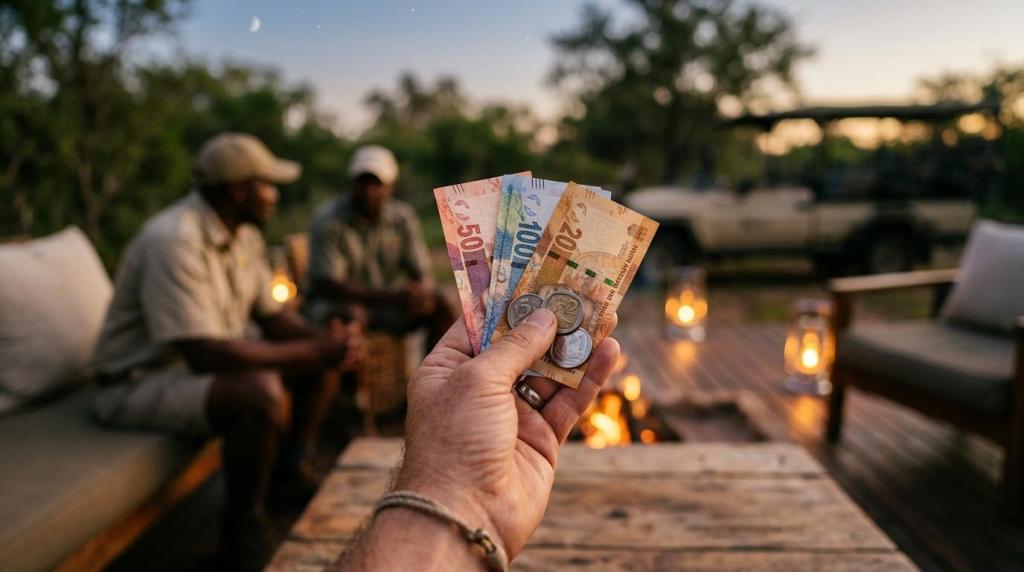
- Gratuities: Tips for guides, trackers, and lodge staff are expected but not included
A few other items sit in the gray area. Laundry may be included at one lodge and chargeable at another. Bush walks may be included but subject to age limits or guide availability. Arrival-day and departure-day drives may depend on your flight or transfer schedule.
South African VAT is generally built into published rates, so the surprise cost is less about tax and more about lodge-specific extras.
Why inclusive safari lodge rates often make sense
Even when the price first looks high, inclusive rates can offer strong value.
A private safari lodge is not like a city hotel where you book a room and decide the rest later. The whole stay runs on a carefully timed wildlife schedule. The best game-viewing hours are early morning and late afternoon. Meals, rest periods, and activities are arranged around those windows. When the main parts of the stay are bundled into one rate, the experience is smoother and easier to enjoy.
You also get more certainty before travel. Instead of wondering what each drive, meal, or drink stop will cost, you know most of the safari essentials have already been handled. That can make planning from overseas much simpler, especially for first-time safari travelers or families.
There is also a practical side to the value. Paying separately for a quality room, three meals a day, two professionally guided drives, vehicle access, lodge staff, refreshments, and reserve operations would add up quickly if priced item by item.
And there is the less visible benefit: time. You spend less of the trip signing slips, comparing add-ons, or deciding whether an activity is worth it. You just get up, climb into the vehicle, and go.
Safari lodge pricing factors: season, occupancy, specials, and payment terms
Inclusive rates are shaped by more than what is in the package. Timing matters. So does who is traveling.
The same lodge can have very different pricing between green season, shoulder season, peak winter safari months, and festive dates. Dry-season travel often commands higher rates because wildlife viewing is strong and demand rises. Holiday periods can push rates higher still.
Rates are almost always quoted per person sharing, not per room.
That detail matters for couples, solo travelers, and families. If one person uses a double room alone, a single supplement often applies. Some lodges waive it in selected seasons or on selected rooms, but it should be checked in advance.
Length of stay can also shift the math. Many properties run offers like stay four nights, pay for three, or include an extra night during quieter months. These specials can make a luxury lodge much more accessible than travelers expect.
Children’s policies vary widely. Some lodges welcome young families. Others only allow children over a certain age on shared drives, and some reserve specific suites or family units for children under a set age. If a child is too young for a shared vehicle, a family may need to book a private vehicle at extra cost.
Payment terms are usually stricter than standard hotel bookings. Deposits are common, and final payment is often due well before arrival. Cancellation penalties can become steep once the travel date gets closer, especially during peak season.
What guest benefits come with an inclusive safari stay
The obvious benefit is convenience, but the guest experience usually goes deeper than that.
At a private lodge, the rate often covers the moments that make safari feel special rather than transactional. Think sunrise coffee by the fire, a stop for rusks after an early leopard sighting, or sundowners on a ridge while the bush turns gold. These are not usually listed as line items, yet they are part of the inclusive value.
Many lodges also include access to the full shared safari program. That can mean not only drives but also guided walks, bush breakfasts, stargazing, educational talks, or conservation-linked visits where available. When those experiences are already built into the stay, guests are more likely to take part in the full rhythm of the lodge rather than treating safari as a single activity each day.
This can be especially helpful for honeymooners, photographers, and first-time visitors who want the classic private-reserve experience without constant decision-making.
Questions to ask about inclusive safari lodge rates before booking
The safest approach is simple: ask for the full inclusions and exclusions in writing before you pay a deposit.
That one step can clear up almost every common misunderstanding.
- Are conservation fees included?: Ask whether reserve levies, park entry fees, or concession fees are part of the quoted price.
- Which drinks are included?: Check if the lodge includes only soft drinks, or also beer, wine, and standard spirits.
- Are safari activities included every day?: Ask whether arrival-day and departure-day drives are included and how flight times affect them.
- Are transfers included?: Confirm whether road transfers or airstrip pickups are covered, optional, or mandatory extras.
- What are the occupancy and policy details?: Ask about single supplements, child rates, age limits, deposits, and cancellation terms.
A clear safari quote should show the room category, board basis, included activities, drinks policy, transfer details, fees, and payment terms. If any of those are missing, ask before booking. That way, the only surprises waiting for you in the bush are the exciting ones.
As a cross-check on budgeting for gratuities, Nicholson Yachts explains how discretionary tipping works on crewed charters, a useful parallel that underlines why staff appreciation is often kept separate from the headline rate.