Choosing between a bush walk and a game drive is not really about picking the “better” safari. It is about choosing the kind of connection you want with the African bush.
One puts you at eye level with tracks, trees, birds, and the small signs that tell the story of what happened before you arrived. The other gives you wider reach, more comfort, and a stronger shot at seeing iconic animals quickly. In Greater Kruger, the best safaris often combine both, but if you are deciding where to place your time, it helps to know exactly what each experience feels like.
Bush Walk vs Game Drive: The Core Difference
A bush walk is a guided safari on foot, led by trained guides, often in small groups and usually in the cooler morning hours. The pace is slower. The focus is narrower, but deeper. You are not racing from sighting to sighting. You are reading the bush as you move through it.
A game drive is the classic safari most travelers picture first. You ride in an open safari vehicle, usually at sunrise and again in the late afternoon. You cover more ground, move between habitats faster, and spend more time looking for large mammals, predators, and major sightings.
That simple difference shapes almost everything else, from comfort and photography to age limits and the kind of memories you take home.
What a Bush Walk Feels Like on Safari
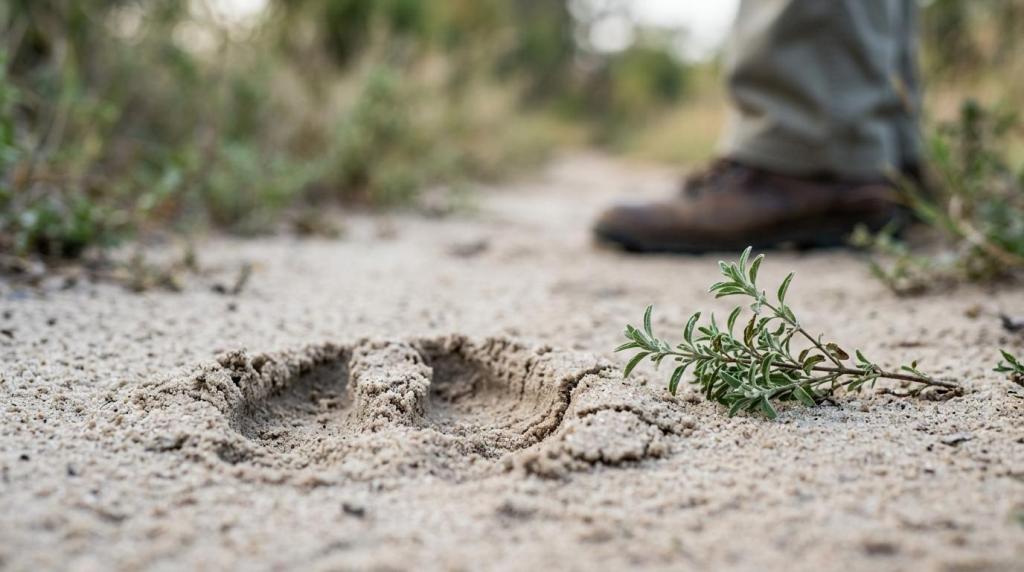
A bush walk changes your scale. In a vehicle, an elephant herd feels impressive. On foot, even an old buffalo track can feel dramatic because you are standing where that animal stood, seeing the print in the dust, noticing how fresh it is, and hearing your guide explain what it means.
The reward of a walk is not only animal sightings. It is the detail. You notice alarm calls from birds, the smell of wild sage crushed underfoot, fresh spoor in a sandy riverbed, and the difference between a tree browsed by giraffe and one pushed over by elephant. For travelers who like nature, fieldcraft, and the quiet thrill of being fully present, that can be the most memorable part of a safari.
Bush walks are also more active. You will walk on uneven ground, stand for briefings, and stay alert to your guide’s instructions. That is part of the appeal, but it also means a walk is not right for every traveler or every trip.
After travelers hear the basics, these are often the reasons they lean toward a bush walk:
- Close-to-the-ground immersion
- Tracking and animal behavior
- Birding and plant life
- A more active safari
- A slower, quieter pace
What a Game Drive Offers for Big Five Sightings
Game drives are built for range. In a matter of hours, you can move from open grassland to riverine woodland, scan a waterhole, follow alarm calls, and check a predator area that would be impossible to reach on foot in the same time.
That broader coverage is a big reason game drives are the core safari activity at most Greater Kruger lodges. If your dream is to see lion, leopard, elephant, rhino, buffalo, giraffe, zebra, and hyena over a short stay, a game drive gives you the best odds. In private reserves, guides may also be able to position the vehicle well for sightings and, where permitted, track animals more flexibly than on public park roads.
There is also a comfort advantage. You are seated, your gear stays with you, and photography is easier for many people from a vehicle platform than while walking. Game drives still come with dust, cold dawns, heat, and bumpy tracks, but they are much less physically demanding than a walk.
That is why game drives are often the best fit for these goals:
- Big Five priority: Wider coverage means more chances at large mammals in limited time.
- Family ease: Open-vehicle safaris are usually easier to manage across different ages.
- Photography comfort: Many travelers prefer the seated setup and stable support for lenses.
- Short-stay value: If you only have a few nights, drives usually deliver more sightings per hour.
Bush Walk vs Game Drive Comparison Table
| Factor | Bush Walk | Game Drive |
|---|---|---|
| Main focus | Tracks, plants, birds, ecology, sensory immersion | Big Five, broader wildlife viewing, larger landscapes |
| Typical pace | Slow and deliberate | Faster, sighting-driven |
| Area covered | Smaller area | Much larger area |
| Physical effort | Moderate | Low |
| Best time of day | Usually morning | Morning and afternoon/evening |
| Photography style | More atmospheric and detail-based | Better for classic wildlife shots |
| Group format | Small, tightly guided groups | Shared or private vehicles, depending on lodge |
| Safety setup | On foot with trained, armed guides and strict briefing | Vehicle-based with guide-controlled viewing |
| Age suitability | Often restricted, commonly 12+ | Usually more family-friendly, lodge rules apply |
| Best for | Repeat safari travelers, nature lovers, active guests | First-timers, families, wildlife-focused travelers |
Wildlife Encounters on Foot vs Wildlife Encounters by Vehicle
Many first-time safari travelers assume a bush walk means walking right up to large animals. That is not how professional guided walks work. The point is not risky proximity. It is awareness, interpretation, and learning to see the bush as a living system rather than a backdrop for photographs.
On a walk, you may see large mammals, but you are just as likely to remember the story around them: the tracks of a leopard from an hour earlier, the sharp warning call of a francolin, the path a herd used to cross a drainage line, or the way the wind changes what is safe to do next. Everything feels more intense because you are part of the landscape, not watching it from a vehicle.
On a game drive, the sighting itself often becomes the center of the experience. A pride of lions in morning light. A leopard in a marula tree. Elephants crossing the road ahead. If your safari wish list is built around those classic moments, drives are usually the strongest match.
Safety, Fitness, and Age Rules for Safari Activities
Safety is one of the biggest practical differences between the two. Bush walks are led under strict procedures, with trained guides setting the pace, direction, spacing, and behavior of the group. Guests must listen closely, stay together, and follow instructions without hesitation.
That structure is why bush walks often have firmer age and fitness rules. Many lodges and reserves do not allow children under 12 on standard walks, and some may apply extra conditions based on terrain, season, or the specific activity. Guests with limited mobility or anyone uncomfortable walking on uneven ground may find a drive far more enjoyable. On uneven ground and in morning dew, the right footwear matters more than people expect; as Hubertushuset notes in its guide to gumboots for hunting and dog training, grip and insulation can be the difference between a relaxed pace and constantly watching your step.
Game drives are easier for a much wider range of travelers. You still need to be able to climb in and out of the vehicle, sit for a few hours, and handle weather shifts, but the barrier to entry is much lower. If comfort, accessibility, or mixed-age travel is a top concern, game drives usually make the choice simpler.
Best Safari Choice for Different Traveler Types
The right answer depends less on the activity itself and more on what kind of traveler you are.
Families with young children usually do best with game drives, especially at lodges that offer child-friendly safari programs. Couples often enjoy a mix, with drives for major sightings and a walk for a more intimate, memorable shared experience. Photographers often lean toward drives first, then add a walk for storytelling images, textures, and atmosphere.
Repeat safari travelers are often the people who fall hardest for bush walks. Once the “I want to see everything” pressure softens, the bush opens up in a different way. You start valuing the signs, the patterns, and the small details just as much as the stars of the show.
If you are sorting your options by traveler type, this quick guide helps:
- First-time safari guests: Game drives first
- Families with younger children: Game drives
- Couples and honeymooners: A mix of both
- Birders and wildlife learners: Bush walks
- Travelers wanting comfort: Game drives
- Active, nature-focused travelers: Bush walks
Why Many Greater Kruger Itineraries Include Both
The strongest safari trips rarely force you into one lane.
A game drive gives you breadth. A bush walk gives you depth. One helps you cover country and build your list of sightings. The other slows everything down and gives context to what you are seeing. Together, they turn a safari from a viewing exercise into a richer wilderness experience.
This is especially valuable on stays of three to five nights, where there is enough time to enjoy the classic rhythm of morning and afternoon drives while still adding a guided walk if your lodge or reserve offers it.
How to Choose the Right Safari Experience for Your Trip
Start with your priority. If you have dreamed about the Big Five for years and this is your first safari, do not overcomplicate it. Choose a lodge and reserve known for strong game-drive viewing and add a walk only if it fits comfortably into the plan.
If you already know you love nature, birdlife, tracking, and the feeling of being out in the bush rather than simply observing it, give real space to a walk. It may become the part of the safari you talk about most when you get home.
A local safari planner can also help match the activity mix to your lodge, reserve, and group makeup. That matters because the best choice is often shaped by practical details more than preference alone.
- Choose a bush walk if: you want immersion, learning, and a more active experience.
- Choose a game drive if: you want comfort, wider coverage, and stronger Big Five odds.
- Choose both if: you have enough time and want a safari that feels complete from both angles.
If your stay is short, put most of your time into game drives. If you have a few extra nights and the right age and fitness fit, add a bush walk. That is often where the safari shifts from exciting to unforgettable.