A safari in Greater Kruger already asks you to pay attention. Dawn starts early. Water matters. Distance matters. Noise matters. Once you see how finely balanced the bush really is, low-impact travel stops feeling like a bonus and starts feeling like the right way to be there.
The good news is that eco-friendly safari travel does not mean giving up comfort or missing out. In many cases, it leads to a calmer, richer experience: quieter game drives, less clutter in your bag, better lodge choices, and spending that supports wildlife areas and nearby communities.
Start with the biggest decisions first
The largest share of a safari’s footprint often comes from transport, accommodation, and what you bring with you. If you make smarter choices in those three areas, many of the smaller decisions fall into place once you arrive.
A practical way to think about it is this: reduce extra movement, reduce waste, and reduce disturbance.
| Decision | Lower-impact option | Why it helps |
|---|---|---|
| Getting to Greater Kruger | Fewer flight segments and one well-planned transfer | Cuts emissions and avoids unnecessary road miles |
| Airport to lodge transfer | Shared shuttle or timed group transfer | Lowers per-person fuel use |
| Game drives | Shared vehicles, fuel-efficient vehicles, or electric safari vehicles where available | Less noise, less fuel, less crowding |
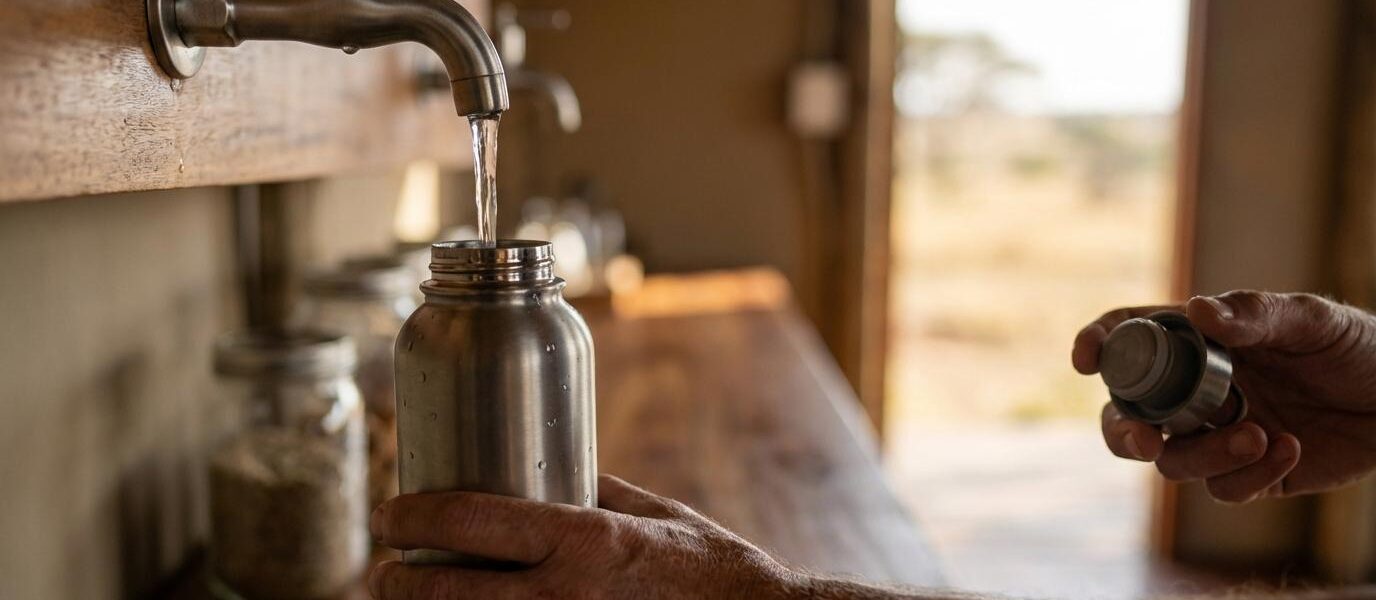
| Drinking water | Refillable bottle and lodge refill station | Reduces plastic waste |
| Lodge stay | Properties with visible water and energy-saving practices | Uses fewer resources in a water-stressed region |
| Park viewing | Quiet, patient sightings with no feeding or flash | Keeps wildlife behavior natural |
Travel smarter to the bush
The greenest route is usually the simplest one. If you are flying into South Africa, try to avoid stacking several short flights on top of each other when one direct arrival plus a road transfer would do the job. If a charter or domestic hop is the best fit for your schedule, look into a carbon offset program through the airline or a trusted third party.
Once you are on the ground, shared transfers make a real difference. A timed shuttle from Johannesburg or a lodge-to-lodge transfer with other guests is often better than multiple private vehicles covering the same road. If you are self-driving, keep your route efficient and resist the urge to add extra detours just because they look close on a map.
This matters inside the reserve too. Smooth driving at posted speed limits is safer for wildlife and uses less fuel. Fast driving does not improve your safari. It just raises the chance of missing something on the roadside or causing harm.
After you have narrowed down your route, keep these checks in mind:
- Flights: choose the most direct routing you can reasonably book
- Transfers: share airport or lodge transfers where possible
- Self-drive: combine stops instead of making extra trips
- Offsets: use a credible carbon program when flying is unavoidable
Choose lodges that use resources carefully
Not every lodge markets itself as “eco,” and that is why a few direct questions can help. Look for signs of real operational care rather than polished language. Solar power, solar hot water, refill stations, reduced single-use plastics, wastewater systems, local hiring, and clear recycling practices all point in the right direction.
In Greater Kruger, this is more than a branding issue. Water is precious, electricity can be stretched, and waste removal is not as simple as it is in a city. A lodge that takes these pressures seriously is usually better prepared in practical ways too.
You do not need a long checklist, but you do want proof that the property is doing more than asking guests to reuse towels. Certifications can be useful when they come from recognized programs like Fair Trade Tourism, Green Key, or EarthCheck. If a lodge is not certified, ask what it is actually doing on the ground.
Good signs are often easy to spot:
- Solar power or solar hot water
- Refillable drinking water stations
- LED lighting and low-energy systems
- Linen and towel reuse
- Clearly marked recycling points
- Local staff and local sourcing
It is also worth paying attention to the feel of the place. Does it keep generator noise low? Are lights used thoughtfully at night? Does it talk openly about conservation fees, community links, or limits around sightings? Those details usually reflect a wider culture of respect for the area.
If you are booking through a safari planner, ask them to compare lodges on these basics, not only on room style, food, and pool views.
Pack for less waste, not just less weight
Packing light is good for flights and transfers, but the bigger win is avoiding disposable items that pile up over several days in the bush. A safari tends to involve early starts, long drives, sunscreen, snacks, water, and plenty of charging cables. Without a little planning, that can turn into a lot of packaging.
A small reusable kit goes a long way. Bring a refillable water bottle, a coffee cup if you use one, and a fold-up shopping bag for road snacks or pharmacy stops. Refillable toiletries are far better than a row of mini plastic bottles. If you use wet wipes, make sure they are truly biodegradable, and never leave them behind anywhere in camp or on the road.
Before you zip your bag, aim for this:
- Bring: refillable bottle, reusable cup, shopping bag
- Skip: disposable cutlery, mini toiletries, plastic straws
- Choose: biodegradable or reef-safer sunscreen and insect repellent
- Download: tickets, permits, maps, and wildlife guides to your phone
One simple habit matters more than people think: keep every scrap of trash with you until you find the right bin. Fruit peels, tissues, and cigarette butts do not belong in the bush.
Wildlife-first behavior on every drive
A better safari is usually a quieter safari.
Animals in Greater Kruger are wild, not performers, and your best sightings often happen when people stop trying to force them. That means no calling to animals, no clapping, no feeding, no dangling food wrappers, and no pressure on your guide to get closer than is sensible. If you are self-driving in Kruger National Park, stay in your vehicle except in designated areas and keep a respectful distance at sightings.
Feeding wildlife is one of the quickest ways to turn a memorable moment into a long-term problem. Monkeys, baboons, birds, and even antelope can become habituated to people very fast. Once that happens, animals start taking risks around camps and roads, and the outcome is rarely good for them.
Noise and light matter too. Keep voices low. Avoid flash photography. At night, use the dimmest light you need, and if you are walking around camp with a torch, a red filter is gentler on nocturnal animals than a harsh white beam. And drones are off the table. In and around protected wildlife areas, they are often illegal and always disruptive.
Private reserves and the national park operate a little differently, so follow the rules for the area you are in. Guided off-road tracking may be allowed in some private reserves under reserve rules. Self-drive visitors in Kruger National Park should stay on marked roads and observe all park regulations.
Roads, trails, and camp behavior count too
Leave-no-trace principles belong on safari just as much as they do in mountain or desert travel. Stick to designated roads and paths. Do not collect feathers, horns, bones, flowers, seed pods, or pieces of wood. They belong where they are, even if they look harmless to pick up.
Camp etiquette is part of this as well. Keep food stored properly. Shut doors and gates. Do not leave rubbish outside your unit or vehicle. If a camp has separate bins or refill points, use them. If a lodge asks guests to limit shower length or reuse linens, take the cue seriously.
These are small acts, but they add up over hundreds of visitors and thousands of safari nights every year.
Let your spending support the region
Low-impact travel is not only about reducing harm. It is also about making sure your visit leaves value behind. In Greater Kruger, that can mean choosing lodges and activities that hire locally, buying food or crafts from genuine local makers, and tipping fairly.
The most useful purchases are often the least flashy. A handwoven basket, beadwork from a local artisan, a community-led cultural visit, or lunch at a small local stop can put money directly into nearby households. That kind of spending sits much closer to the source than imported souvenir stock.
There is also a line every safari traveler should hold firmly: avoid exploitative wildlife attractions. Cub petting, walking with predators, and staged encounters are not conservation. They are red flags. If an activity depends on touching, holding, or posing with wild animals, skip it.
If you want to go one step further, ask where park fees and reserve fees are directed, or make a donation to a reputable conservation or community initiative in the area. Even modest support can help fund ranger work, habitat care, research, school projects, or local livelihoods tied to conservation.
A simple standard for every decision
When you are unsure what to do, ask a short question: does this choice create less waste, less noise, and less pressure on wildlife or water?
That test works almost everywhere. It works when choosing a transfer, when booking a lodge, when packing your day bag, and when deciding whether to edge closer to an elephant sighting or stay put and let the moment come to you.
A safari feels sharper when you move lightly and pay attention. The bush rewards patience, not excess. And that usually makes for a better trip in every sense: cleaner camps, calmer sightings, stronger local benefit, and memories that feel tied to the place rather than imposed on it.