Choosing between a self-drive trip in Kruger National Park and a guided safari in a private reserve is not really about which one is “better.” It is about what kind of safari you want to have.
Some travelers love the freedom of being behind the wheel, setting their own pace, and feeling that every sighting was earned. Others want expert guides, open safari vehicles, polished lodge stays, and the best possible chance of close, well-positioned wildlife viewing. Both options can be excellent. They just deliver very different days in the bush.
Kruger self-drive safari flexibility and independence
A self-drive safari in Kruger gives you real control over your trip. You choose when to leave camp, which roads to take, how long to wait at a waterhole, and whether you want to spend an hour with elephants or move on in search of lions.
That freedom is a big part of the appeal. Kruger has a vast public road network, a wide range of habitats, and enough space to shape a safari around your own interests. Birders can linger near rivers and dams. Families can take a relaxed pace with regular camp stops. Photographers can return to productive roads over several days and work patiently with the light.
There is also a very satisfying sense of participation. You are not only a passenger. You are reading the landscape, watching for movement, checking the treeline, and learning how time of day, weather, and water influence animal activity.
Still, independence comes with limits. You must follow gate times, stay on public tourist roads, obey park rules, and remain in your vehicle except in designated places. You also need to accept that some drives will be quiet. That is part of the self-drive rhythm.
Guided private reserve safari access and comfort
A guided safari in a private reserve changes the experience almost immediately. You are no longer responsible for driving, route planning, timing, or wildlife judgment. Instead, a guide and often a tracker lead the search, explain behavior, and manage the day around the best activity windows.
In the Greater Kruger region, many private reserves share unfenced boundaries with Kruger, so animals move freely across a larger ecosystem. The difference is not the wildlife itself, but the way the safari is conducted. Drives usually take place in open vehicles, often at dawn and late afternoon into evening, and in many reserves guides can use private roads and carefully approach some sightings off-road when reserve rules allow it.
That access changes the feel of a sighting. You may spend longer with a leopard, get a cleaner angle on a lion pride, or follow fresh tracks with a level of confidence that is hard to match on a self-drive.
The lodge side of the experience matters too. Many private reserve stays bundle accommodation, meals, drinks, and twice-daily game drives into one package. For travelers on a short trip, or for anyone who wants a more polished safari from start to finish, that can feel worth every dollar.
Self-drive Kruger vs private reserve safari at a glance
The biggest differences are easier to see side by side.
| Factor | Kruger self-drive | Guided private reserve safari |
|---|---|---|
| Cost | Usually far lower | Usually much higher |
| Daily control | Very high | More structured |
| Wildlife search | Based on your skill, patience, and luck | Led by guides and trackers |
| Road access | Public tourist roads only | Private traversing areas, sometimes off-road at sightings |
| Night viewing | Limited unless on official guided drives | Commonly included |
| Comfort level | Depends on your vehicle and lodging choice | Usually premium and all-inclusive |
| Learning | Self-taught or app/guidebook based | Strong interpretation from guides |
| Stress level | Higher for first-timers | Lower, especially on short trips |
The table points to a simple truth: Kruger self-drive gives you more freedom, while private reserves give you more support and a more curated safari.
Wildlife sightings and game viewing quality
If your main question is, “Where will I see more?” the answer needs a little nuance.
Kruger can produce fantastic sightings. It is huge, biodiverse, and full of life. On a good self-drive, you can see elephants, buffalo, giraffes, zebras, antelope, birds of prey, and predators all in the same day. Over a longer stay, the sheer variety can be hard to beat.
But self-drive game viewing depends heavily on timing, route choice, traffic, and luck. At a lion sighting on a public road, you may be one car among many. If the animal moves into thick bush, the sighting can be over quickly. You also cannot leave the road to improve your angle.
Private reserves tend to offer fewer variables and better odds per drive. Guides know their traversing areas intimately. Trackers read spoor and fresh signs. Vehicles communicate sightings. Early morning and evening drives are built into the stay, and night drives add access to nocturnal species that self-drivers rarely see on their own.
That does not mean every drive in a private reserve is dramatic. Nature does not run on demand. It does mean the safari is designed to improve your chances of high-quality sightings, especially of predators.
After a few days, the contrast usually feels like this:
- Self-drive rewards patience
- Private reserve rewards focus
- Kruger offers breadth
- Private reserves often offer intensity
Cost comparison between Kruger self-drive and private reserves
Cost is often the most decisive factor, and this is where the gap is usually widest.
Kruger self-drive is one of the most accessible ways to have a real safari in Africa. Park entry fees are transparent, accommodation ranges from simple camps to more comfortable stays, and you can manage spending by choosing your own vehicle, meals, and trip length. For families or couples sharing a rental car, the value can be very strong.
Private reserve safaris are usually priced as a full experience rather than a basic park visit. That rate often includes lodging, meals, drinks, and game drives, but it can still feel expensive, especially once conservation levies, transfers, and gratuities are added. For many travelers, the value is less about low cost and more about how much is handled for them.
A useful way to think about price is this:
- Kruger self-drive: Lower entry cost, more budget control, stronger value over longer trips
- Private reserve safari: Higher total spend, stronger value for short stays and premium experiences
- Hybrid safari: A middle ground that blends affordability with expert-led wildlife viewing
If you have a week or more, Kruger self-drive stretches your budget much further. If you only have two or three nights and want every game drive to count, a private reserve often makes more sense.
Safety, stress, and driving confidence on safari
This section matters more than many travelers expect.
Kruger self-drive is safe when park rules are followed, but you are the one making decisions. You need to judge road conditions, manage your time, stay calm around large animals, and handle long hours behind the wheel. Even a simple elephant encounter can feel intense when you are in the driver’s seat with nobody to read the animal for you.
For experienced travelers, that responsibility can be part of the excitement. For first-time safari guests, it can add tension. Some people spend half the day worrying about distances, navigation, and gate times instead of relaxing into the experience.
Guided private reserve safaris remove most of that burden. The guide handles positioning, timing, and wildlife behavior. The tracker adds another layer of field skill. Guests can focus on watching, learning, and taking it all in.
If you are unsure which style suits you, these questions help:
- Driving comfort: Are you happy with long drives, early starts, and gravel roads?
- Wildlife confidence: Will close encounters with elephants, buffalo, or predators feel exciting or stressful?
- Trip pace: Do you want total freedom, or would you rather have a well-run daily rhythm?
Educational value and the safari atmosphere
A guided safari nearly always wins on interpretation.
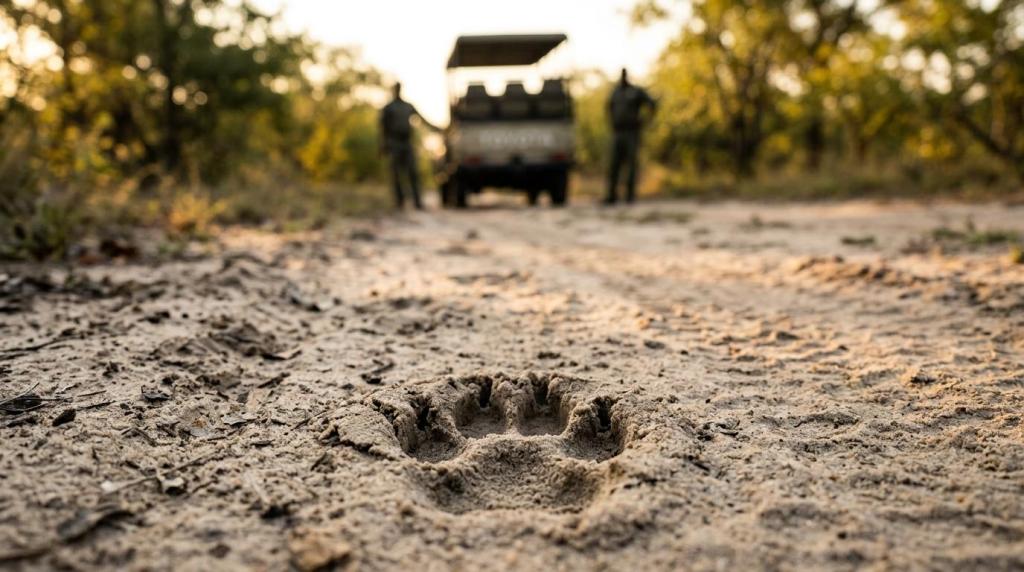
A good guide does much more than find animals. They explain why a lion pride is resting where it is, how oxpeckers interact with buffalo, what alarm calls reveal, and how weather affects movement. A tracker can turn a set of prints in the sand into a full story. That adds richness to every drive.
Self-drive has its own kind of learning, though. It is quieter, slower, and more personal. You notice more when you are actively scanning for animals. Many travelers enjoy using maps, field guides, and bird apps, then building their own knowledge day by day. The learning is less formal, but it can be deeply rewarding.
The atmosphere differs too. A self-drive often feels private and calm. A guided reserve safari feels more social and hosted.
That difference can shape the entire trip.
Which travelers suit Kruger self-drive best
Kruger self-drive tends to work best for travelers who like independence and do not mind that some drives are better than others.
It is especially good for repeat safari-goers, budget-conscious travelers, families who want control over the day, and photographers who prefer to work at their own pace over many days. It also suits people who enjoy the process of searching, not only the result of finding.
This profile often matches self-drive travelers well:
- Independent couples
- Families sharing costs
- Birders and naturalists
- Longer trips with flexible pacing
Which travelers suit private reserve safaris best
Private reserves are often the better fit for first-time safari travelers, honeymooners, short-stay visitors, and anyone who wants the strongest mix of comfort, guiding, and premium wildlife access.
They also suit travelers flying in from Johannesburg or Cape Town who want an easier arrival and a more concentrated safari. With short travel windows, wasting time on logistics or quiet midday driving can feel frustrating. A guided reserve stay keeps the focus on the best safari hours.
Many travelers prefer private reserves when these priorities matter most:
- Short stay: You want high-quality game viewing in two to four nights
- Expert guidance: You care about learning as much as seeing
- Premium comfort: Lodge service, open vehicles, and hosted dining matter to you
- Lower effort: You would rather not drive, plan routes, or manage timing
A hybrid Greater Kruger safari can give you both
For many travelers, the smartest answer is not choosing one over the other. It is combining them.
A few days of self-drive in Kruger can give you the scale, freedom, and value that make the national park so special. Adding a couple of nights in a private reserve can then sharpen the experience with guided drives, stronger predator tracking, night safaris, and a more immersive lodge atmosphere.
This combination works especially well for first-time visitors who want both sides of the safari experience: the satisfaction of finding wildlife on their own, and the thrill of seeing what skilled guides and trackers can do in top Greater Kruger reserve areas .
If your choice still feels difficult, think less about labels and more about how you want each day to feel. Do you want to wake up and decide everything yourself, or do you want to step into an open vehicle and let the bush come alive through expert eyes? Both can be memorable. The best fit is the one that matches your pace, your budget, and the kind of adventure you want to take home.