A safari feels effortless when everyone follows the same unwritten (and sometimes written) rules. The reward is real: calmer wildlife, safer sightings, better photos, and a drive that feels like a privilege rather than a traffic jam in the bush.
Etiquette is also part of conservation. When visitors keep noise down, stay on roads, and give animals space, the wilderness stays wild. That is exactly what most travelers come to Greater Kruger for.
Why etiquette matters more here than in most places
Wild animals read your behavior fast. A vehicle that creeps too close, a crowd that gets loud, or a camera flash at the wrong time can change how an animal hunts, rests, or protects its young.
There is also a human side. Safari vehicles share narrow roads, limited viewing space, and the same sunrise and sunset windows. A small choice you make, like staying quiet at a leopard sighting, often improves the moment for everyone around you.
Kruger Safari Africa and other reputable operators plan trips around responsible viewing, because long-term wildlife protection and great sightings go together.
Vehicle rules that keep you safe and keep wildlife relaxed
Whether you are in Kruger National Park on a self-drive or in a private reserve on an open vehicle, the baseline is simple: the vehicle is your safe zone, and the road is the boundary.
In Kruger, park regulations are clear that you only exit in designated areas (camps, picnic spots, hides where allowed). A common rule visitors miss is that no part of the body may protrude from a window or sunroof, and doors should remain closed. In practice, that means no standing through the roof, no leaning out for a photo, and no sitting on door frames.
After you absorb that, the rest becomes easier.
- Stay seated
- Doors closed
- Hands and cameras inside the vehicle
- No feeding wildlife
- No litter, ever
- Keep voices low at sightings
Speed and spacing are part of etiquette, not just driving skill. In Kruger National Park, posted limits are typically 50 km/h on tar and 40 km/h on gravel. Those numbers exist because animals cross suddenly, and because faster driving raises dust, noise, and risk.
If you are on a guided game drive, your guide may angle the vehicle for the best view. Let that happen. Shifting around, standing up, or pressuring the guide to “get closer” usually does the opposite of what you want.
How sightings work: space, patience, and sharing
The best sightings rarely come from chasing. They come from waiting, watching behavior, and letting animals choose the distance. Predators in tall grass, elephants on a road, and rhinos near thickets all have different comfort zones, and a good guide is constantly reading those cues.
Crowding is where etiquette becomes visible. At a popular lion or leopard sighting, vehicles should avoid boxing the animal in, blocking the road, or cutting off an escape route. If you arrive late, it is normal to accept a second-row view for a few minutes.
A helpful way to think about it is this: you are watching a wild animal living its normal day, not a performance.
- Approach slowly: Rolling in quietly is better than braking hard and slamming doors.
- Leave an exit: Never be the vehicle that forces an animal to turn back.
- Limit the time: If others are waiting, take your photos and then give the sighting room.
- No horns or shouting: Sound carries far and changes the whole scene.
- Engine off when safe: Less noise, less fumes, more natural sound.
Even your conversations matter. Low voices keep animals calmer and help other guests hear alarm calls, bird activity, and contact calls that guides use to locate wildlife.
Photography and tech: great images without stressing wildlife
Safari photography is at its best when it looks natural. That starts with natural light and respectful distance.
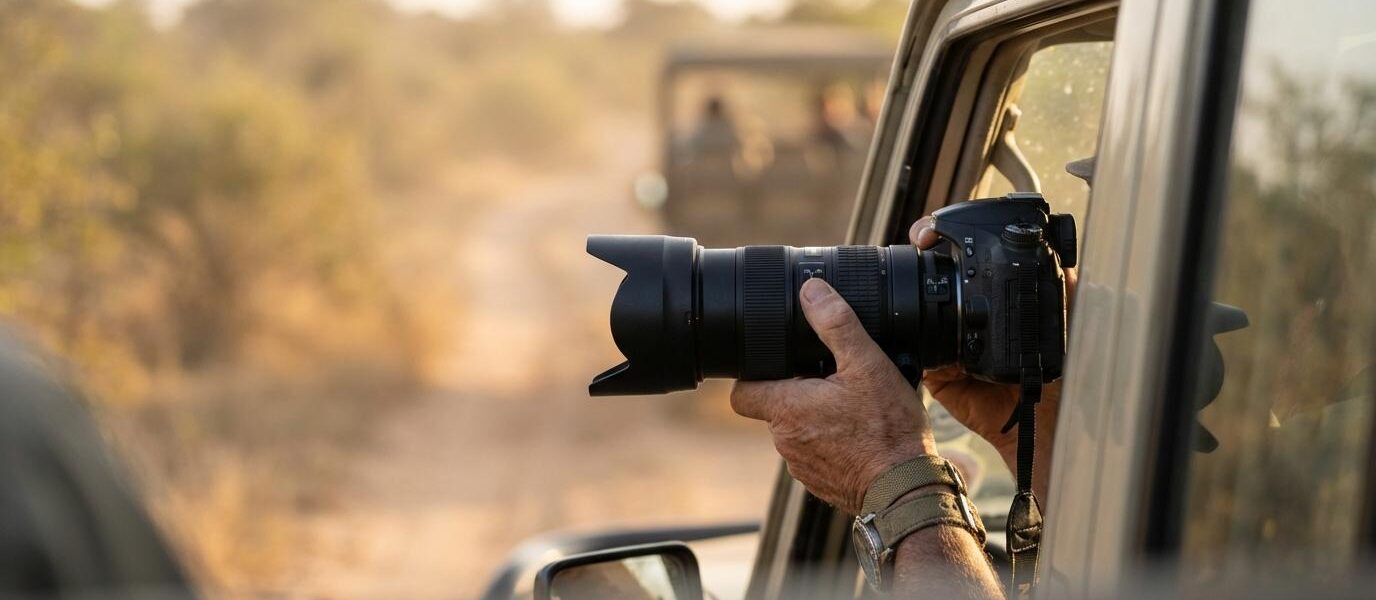
Flash is a common problem, especially at night. A bright burst can startle animals and may temporarily impair vision. Many guides will ask you to turn flash off completely, and it is wise to follow that request even if your camera struggles in low light.
Phones and screens also change the atmosphere. Loud calls, speaker audio, and constant notifications pull attention away from the bush and can disturb nearby guests at sightings and in camp.
Drones are another clear line. Drones are prohibited in Kruger National Park, and many private reserves ban drones as well. Beyond rules, they stress wildlife and disrupt the experience for everyone who came for quiet.
If you want a strong photo set from Greater Kruger, focus on behavior and story: a hippo yawning, elephants greeting, a lilac-breasted roller landing, a lion scanning the wind. Those moments do not require you to push closer.
Tipping on safari in and around Greater Kruger
Tipping culture in South Africa is real, and in safari settings it is usually welcomed as a thank-you for good service, not a fee. Many lodges provide envelopes, and tips are often given at the end of your stay so you can base it on the full experience.
Cash in South African Rand, with small denominations, is the easiest. Card tips are not always possible in remote areas, and ATMs may be far away.
Below are commonly used ranges travelers reference for Kruger-area safaris. Your lodge may suggest different amounts based on whether tips are pooled, whether meals are included, and how many staff members support your stay.
| Role | Suggested tip (per guest) | When and how it’s usually given |
|---|---|---|
| Safari guide | R300 to R600 per day | End of stay, often in an envelope |
| Tracker (private reserves) | R250 to R500 per day | End of stay, often given separately |
| Transfer driver (airport or inter-camp) | Around R100 per trip | After the transfer |
| Housekeeping | Around R100 per day | Often pooled through the lodge |
| General lodge staff (waiters, hosts) | Roughly R200 to R300 per day | Often pooled through management |
| Porters | R20 to R50 per bag | At the time of help |
| Restaurant servers (where you pay a bill) | 10% to 15% | Added at payment or left in cash |
If you are unsure, ask the lodge manager or your safari planner how that specific camp handles tip pooling. That quick question prevents awkwardness and helps tips reach the right teams.
A practical approach many travelers use:
- Carry a tipping envelope system: Separate small notes by role and day so you are not counting cash in public.
- Tip for service, not perfection: Weather, sightings, and road conditions change; effort and professionalism are what you are rewarding.
- Match the setup: A private vehicle experience often leads to higher tips than a larger group activity.
Conservation-friendly behavior that makes a visible difference
Conservation-friendly travel is less about grand gestures and more about consistent habits. Guides notice quickly who treats the bush like a living place rather than a backdrop.
Start with litter. Even a fruit peel or a tissue can harm animals, attract baboons, or spread disease. Use bins in camp, and keep a small bag in your daypack for wrappers on the road.
Water and power use matter too. Many lodges run on solar, generators, or limited borehole supply. Short showers and switching off lights are not just polite, they support the camp’s footprint goals.
After you settle in, these habits keep you on the right side of both etiquette and park rules:
- Pack out every scrap of trash
- Stay on designated roads and tracks
- Keep wildlife wild by never feeding anything
- Refill a water bottle instead of buying single-use plastic
- Use reef-safe sunscreen and mild soaps when possible
If you want to go one step further, ask your safari planner about conservation partners connected to your lodge or reserve. Some guests choose to donate to trusted park foundations or community projects tied to anti-poaching support, habitat protection, or local schooling.
Camp and lodge courtesy: the small choices people remember
Safari is social in a quiet way. You might share a vehicle with strangers, sit at a communal table, or meet the same guests at a waterhole hide each night.
Punctuality is an underrated form of etiquette. Game drives often leave before sunrise, and one late guest can cost everyone the best light and the most active wildlife window.
Scent and sound also travel far in the bush. Strong perfume, loud videos, and bright phone screens on a dark deck can disrupt the mood. Many camps run with soft lighting at night for good reasons, including insects, ambiance, and wildlife movement near camp.
If you are traveling as a family, kids are welcome on many safaris, but it helps to set expectations early: whispers at sightings, slow movements, and no running in camp. A good lodge will guide you on what is safe and what is not.
If you are self-driving in Kruger National Park
Self-driving is rewarding, and etiquette becomes your responsibility rather than your guide’s job.
Treat every stop as a shared viewing area. If you pull over at a sighting, do not block the road, do not stop on a blind corner, and do not create a second lane on the shoulder that forces others into dust or bushes. If a faster vehicle approaches, give space to pass without drama.
Phones are best kept for camp. SANParks rules generally restrict cell phone use to camps, gates, or emergencies, and even when reception exists, a call at a sighting changes the atmosphere fast.
Most importantly, never leave your vehicle outside designated areas. It may feel calm until it is not, and park rules are strict for good reason.
A simple day-one checklist that keeps you on track
Etiquette can feel like a lot to remember, so it helps to pick a few anchors and repeat them each drive: stay inside the vehicle, give animals space, keep it quiet, and leave no trace.
When those habits become automatic, you get the best version of safari. Not just better sightings, but a deeper feeling that you are a respectful guest in a place that deserves it.