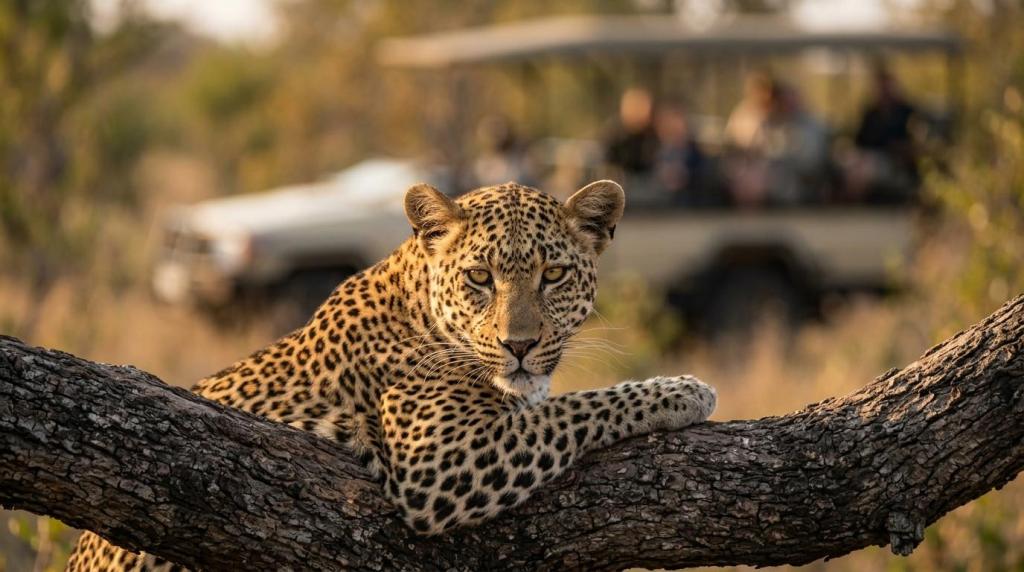
The difference between a mid-range lodge and a luxury lodge in Greater Kruger is real, but it is not just about prettier rooms or a more expensive wine list.
What many first-time safari travelers really want to know is simpler: if you pay a lot more, do you actually see more wildlife, get better guiding, and enjoy a smoother trip, or are you mostly paying for a plunge pool and polished design?
The honest answer is that you usually get both. The room improves, yes. So does the service. But the biggest upgrades often happen out on game drive and around the way your whole stay is run.
Before getting into the differences, it helps to say this clearly: a good mid-range safari in Greater Kruger can still be excellent.
After all, both categories can offer the core ingredients people come for:
- Big Five country
- Sunrise and sunset drives
- Comfortable en-suite rooms
- Memorable bush dinners
- Warm South African hospitality
What changes between luxury and mid-range lodges in Greater Kruger
Greater Kruger includes private reserves like Sabi Sands, Timbavati, Klaserie, Manyeleti, Thornybush, Kapama, Balule, and Umbabat, along with areas connected to the wider Kruger ecosystem. That matters because lodge category and reserve access are closely linked, though not perfectly. Some mid-range lodges sit in very strong wildlife areas. Some luxury lodges justify their price not only with comfort, but with access, guiding standards, and lower guest density.
So when people ask, “What do I actually get?” the best answer is this: you are usually paying for a different level of privacy, a higher staff-to-guest ratio, more inclusive pricing, and a more refined safari experience overall.
You are also often paying for less friction.
A luxury stay tends to include more of the trip in one rate, with fewer add-ons, fewer logistical questions, and more flexibility once you arrive. A mid-range lodge can still be very comfortable, but it is more likely to feel structured, shared, and simpler in its finish.
A practical way to think about it looks like this:
- Luxury usually means: bigger suites, more inclusions, smaller game-drive vehicles, and more personalized service
- Mid-range usually means: comfortable rooms, strong core safari value, and fewer extras built into the rate
- The biggest swing factor: whether the lodge is in a private reserve with off-road driving and stricter vehicle limits
- The least important difference: décor alone
Room comfort and lodge amenities at Greater Kruger lodges
If your picture of safari includes a canvas-style suite, a king bed, an outdoor shower, and your own deck facing the bush, you are describing a setup that is common at the upper end of the market. Luxury lodges in Greater Kruger often offer very large rooms or stand-alone villas, generous bathrooms, indoor and outdoor showers, lounge space, high-end finishes, and a private plunge pool.
That last point is one of the clearest dividing lines.
In many luxury lodges, each suite has its own plunge pool or private cooling pool. In mid-range properties, a swimming pool may still be available, but it is usually shared by all guests. Rooms are typically smaller and more standardized, with less private outdoor living space.
That does not mean mid-range feels basic. In fact, a well-run mid-range lodge can feel stylish, peaceful, and very comfortable. You can still expect air conditioning, en-suite bathrooms, good beds, and attractive common areas. What you give up is space, exclusivity, and those higher-touch extras like in-room fireplaces, full spa facilities, or private decks designed for long afternoons between drives.
For travelers who spend very little time in their room, this may not matter much. For honeymooners, families needing extra space, or guests building in downtime, it matters a lot.
Safari vehicles, guides, and wildlife access in Greater Kruger
This is where the price gap starts to make more sense.
Luxury lodges usually run smaller open safari vehicles with fewer guests per drive. That can mean four to six people on a vehicle rather than six to eight, sometimes even fewer if the lodge keeps numbers low. The feel is quieter and more responsive. If a leopard settles in good light, your guide may be able to hold the sighting a little longer, adjust position carefully, and give guests more room for photos.
Guiding standards also tend to be stronger at the top end, especially where lodges pair a field guide with a tracker. That combination is one of the real joys of a high-end Greater Kruger safari. The tracker reads spoor and bush movement. The guide manages positioning, interpretation, and the whole rhythm of the drive.
Reserve rules matter too. Many luxury lodges are in private reserves where off-road driving is allowed at sightings, vehicle numbers are controlled, and night drives or bush walks are part of the experience. Those advantages can change the safari far more than room décor ever will.
Mid-range lodges vary. Some are in private reserves and can deliver a very solid wildlife experience. Others operate closer to public-road systems or run more fixed-format drives. In those cases, sightings may feel less flexible, and the schedule can be more rigid.
If wildlife viewing is your top priority, ask about these details before asking about thread count.
Dining, service, and what is usually included
Meals are another area where the categories part ways. Luxury lodges often include breakfast, lunch, dinner, snacks, and a good selection of drinks in the nightly rate. Dining is usually more refined, with plated meals, better wine service, special dietary care, and varied settings that may include the boma, a riverbed breakfast, or a candlelit deck dinner.
Mid-range lodges usually provide very good food too, though it is more likely to be set-menu or buffet style, with drinks billed separately and lunch handled more simply. You will eat well, but the dining may feel more practical than indulgent.
Service follows the same pattern. In luxury lodges, staff often know guest preferences quickly. Housekeeping feels almost invisible, laundry may be included, and the whole stay is built to feel easy. Mid-range service is still friendly and professional, but it is generally less personalized because teams are smaller and the lodge is operating at a lower price point.
That difference often shows up in small moments:
- Luxury service touches: welcome drinks, detailed rooming, turn-down service, laundry, tailored dietary handling
- Mid-range service touches: efficient hosting, good housekeeping, straightforward meal service, optional extras at added cost
- Luxury activity range: bush walks, night drives, private dining, spa treatments, children’s programs
- Mid-range activity range: usually the standard morning and afternoon drives, with some optional add-ons
Greater Kruger lodge comparison table
Here is a simplified side-by-side view of what travelers usually get.
| Feature | Luxury Lodges | Mid-Range Lodges |
|---|---|---|
| Typical nightly rate | About R8,000 to R14,000+ per person, per night | About R3,500 to R8,000 per person, per night |
| Room style | Large suites or villas | Comfortable chalets, rooms, or tented suites |
| Private plunge pool | Common | Rare |
| Main pool | Yes | Often yes |
| Spa and wellness | Common | Limited or unavailable |
| Meals | Usually all meals included | Often breakfast and dinner, sometimes lunch |
| Drinks | Many included | Often extra |
| Game-drive vehicle size | Smaller, often fewer guests | Usually fuller shared vehicles |
| Guide setup | Guide, sometimes tracker too | Usually one guide |
| Wildlife access | Often private reserve benefits | Varies by lodge and reserve |
| Off-road driving | Often allowed in private reserves | Varies, less common at lower price points |
| Transfers | More often included or arranged within package | More often extra |
| Service level | Highly personalized | Friendly and efficient |
| Best for | Honeymoons, milestone trips, privacy, photographers | Value-focused travelers, families, shorter stays |
What the price difference usually buys you
The room matters, but it is rarely the full story. The extra spend at a luxury lodge is often buying three things at once: better safari logistics, more privacy, and fewer out-of-pocket surprises.
That bundled value can be significant. A higher-end rate often includes accommodation, all meals, game drives, selected drinks, and sometimes transfers or park fees. A mid-range rate can look much lower at first glance, then rise once you add drinks, lunch, transfers, premium activities, or private guiding requests.
Peak season changes the picture too. During the dry months, usually June through October, both categories become more expensive, but luxury properties can rise sharply because demand is strong and room counts are low. Mid-range lodges may still offer better value if you book early and keep expectations realistic.
Paying more does not guarantee a better safari in every single case.
A well-located mid-range lodge in a strong reserve can outperform an expensive lodge in a weaker setup. That is why smart safari planning starts with reserve quality, guiding, and inclusions, then moves to room style and extras.
Who should choose a luxury lodge in Greater Kruger
Luxury makes the most sense when the stay itself is part of the dream.
That usually includes honeymooners, anniversary travelers, guests wanting privacy between drives, and travelers who would rather have one shorter but exceptional safari than a longer stay with more compromises. It also suits people who appreciate fine dining, spa time, a quieter camp atmosphere, and a high level of personal attention.
Photographers often benefit too, especially where vehicle numbers are low and guiding standards are strong. Families can also do well in luxury lodges if they need family suites, child-friendly programming, or the option of a private vehicle.
Who should choose a mid-range lodge in Greater Kruger
Mid-range is often the sweet spot for travelers who care most about wildlife, comfort, and sensible pricing.
That includes first-time safari guests, families keeping an eye on budget, couples combining safari with Cape Town or the Garden Route, and travelers who plan to spend most of the day out on drives rather than in their room. A good mid-range lodge can still deliver thrilling sightings, satisfying food, welcoming service, and a very memorable safari atmosphere.
It can also be the smarter move if your priority is length of stay. Four nights at a solid mid-range lodge may give you more wildlife time than two nights at a top luxury property, and more time on safari often matters.
Questions to ask before booking a Greater Kruger lodge
Category labels can be misleading. One lodge’s “luxury” may feel like another lodge’s upper mid-range, and one “mid-range” property may have a much better safari setup than a prettier but less practical competitor.
Before booking, ask direct questions like these:
- What is included in the nightly rate: meals, drinks, game drives, walks, transfers, laundry, park fees
- How many guests are usually on a vehicle: and can a private vehicle be booked
- Is the lodge in a private reserve: and are off-road driving and night drives permitted
- What is the room setup: size, air conditioning, outdoor shower, family layout, private pool
- Are there extra costs on site: premium drinks, spa, transfers, conservation fees, child rates
That short list will usually tell you more than the lodge category alone.
For many travelers, the best result is not choosing the most expensive option. It is choosing the lodge where the safari style, reserve access, and inclusions match the trip you actually want. In Greater Kruger, that is where value really lives.