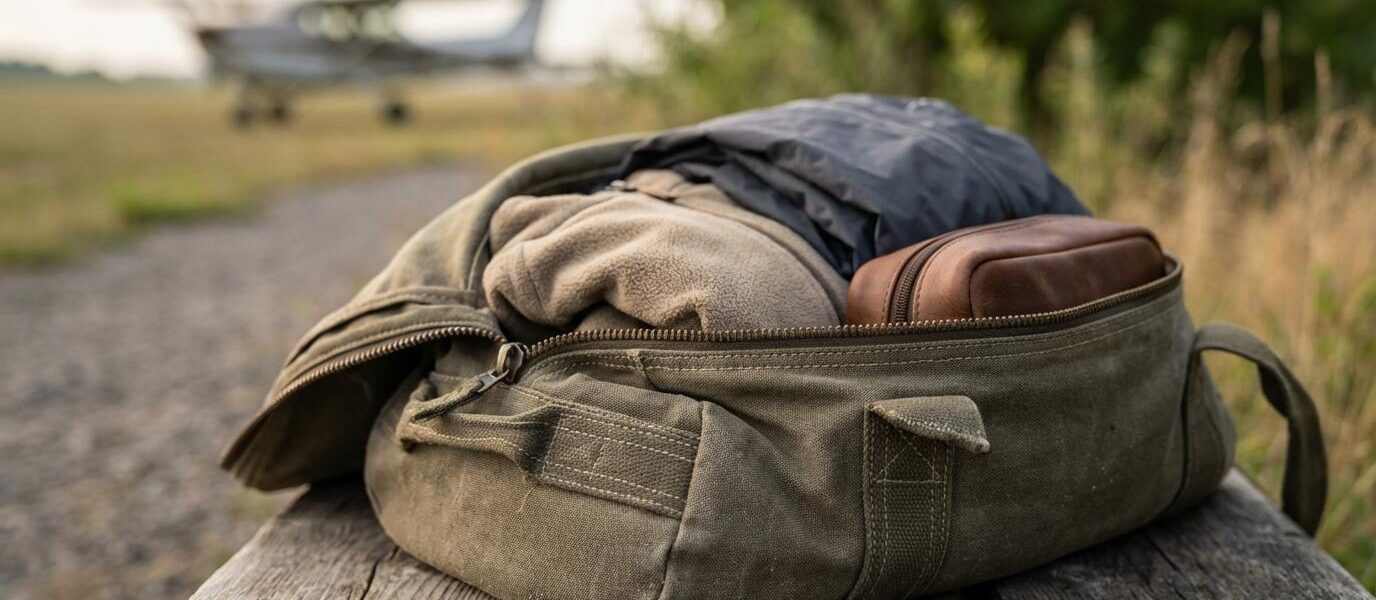
What Greater Kruger weather feels like (and why it changes your bag)
Greater Kruger runs on a simple rhythm: early starts, open vehicles, and big temperature swings, so don’t forget your passport for identification purposes. Even when the forecast looks mild, wind in an open safari vehicle can make dawn drives feel much colder than you expect.
The year breaks into two practical packing seasons, so be sure to include a comprehensive Greater Kruger safari packing list and checklist for all essential items.
Dry season (roughly May to September) brings crisp mornings and evenings, warm sunny days, and lots of dust. Green season (roughly October to April) brings heat, humidity, dramatic afternoon storms, and more insects.
One packing approach works for both: breathable layers in neutral colors, plus one true warm layer and one true rain layer.
- This year-round approach works whether you’re staying in Sabi Sands, the Timbavati Game Reserve, Kapama Game Reserve, or Manyeleti Game Reserve—because the daily temperature swing and open-vehicle wind chill are the real constants across Greater Kruger.
- If you’re still deciding when to go, this overview helps set expectations before you pack: Greater Kruger seasons explained.
The year-round core: pack this first
If you do nothing else, build your bag around clothing you can layer and repeat. Laundry is common at many lodges and camps, so you can pack fewer items and still feel fresh.
After you’ve sorted your basics, add these high-impact, low-bulk essentials, along with your personal medication and a medical kit:
- Neutral shirts (short and long sleeve)
- Lightweight long pants
- Fleece or insulated jacket
- Waterproof shell or rain jacket
- Wide-brim hat
- Sunglasses
- Comfortable closed-toe shoes
- Binoculars
- Insect repellent
- Sunscreen and SPF lip balm
- Headlamp
- Daypack
- Reusable water bottle
That short list covers most safari days, most lodges, and most travelers.
Clothing: practical layers that look good in the bush
Neutral tones are not a fashion rule, they are a comfort rule. Khaki, olive, tan, and gray hide dust, avoid glare in photos, and feel calm out on the vehicle. Bright white shows dust instantly; loud colors can draw attention in ways you do not want.
Aim for a small “capsule wardrobe” you can mix and match. A typical 3 to 5 night safari often works well with 2 to 3 tops, 2 bottoms, and layers, then repeat.
A simple way to think about fabrics:
- Cotton feels great in heat but dries slowly after rain or laundry.
- Modern synthetics dry fast and pack small, but can hold odor if you bring too few pieces.
- Thin merino is excellent for cool mornings and repeats well, but costs more.
Bring at least one long-sleeve top and long pants even in summer. You will use them for sun, wind, and mosquito protection.
Quick guide: what to wear by season and activity
The table below is a reliable starting point for most Greater Kruger itineraries, including private reserves with twice-daily game drives.
| Scenario | What you’ll be glad you packed | Why it matters |
|---|---|---|
| Dry season dawn drive | Fleece or insulated jacket, beanie, light gloves | Wind chill in an open vehicle can feel biting |
| Dry season midday | Breathable short sleeve, hat, sunscreen | Strong sun and warm temps even in winter |
| Green season game drives | Quick-dry shirt, lightweight long pants, rain shell | Humidity and sudden storms are common |
| Bush walks | Closed-toe shoes, long pants, long sleeve, hat | Thorns, insects, and sun exposure |
| Lodge downtime | Sandals, swimwear, casual outfit | Pool time and relaxed meals between drives |
| Evening at camp | Light layer plus insect repellent | Mosquito activity rises around dusk |
If you want a clearer picture of how a typical day flows (and why you’ll keep reaching for layers), see: a day on safari in Greater Kruger.
Footwear: keep it simple and already broken-in
Most guests do not need heavy hiking boots for Greater Kruger. Drives are done from vehicles, and walks are usually moderate and guide-led. What you do need is comfort and grip.
Bring one pair of closed-toe walking shoes or trail sneakers with a decent tread, and one easy camp shoe for the room and pool. Add socks that handle dust and heat, plus a warmer pair if you travel in winter.
If your shoes are new, wear them on long walks before your flight. Blisters on safari feel bigger than they should.
- If your itinerary includes guided walks, keep footwear simple but stable: closed-toe, grippy, and already worn-in.
Safari gear that earns its space
Binoculars change your safari. Even when animals are close, binoculars help you see behavior, birds, and the detail that makes sightings feel personal. An 8×42 is a popular balance of brightness and steadiness; 10x can be great if your hands are steady.
Camera gear can get complicated fast, so keep it realistic for your goals. Many travelers do brilliantly with a modern phone plus a small pair of binoculars, then save the “big lens” kit for dedicated photography trips.
If you are bringing a camera, plan for dust and bumps.
A compact daypack is your daily cockpit. It should fit your camera, a layer, sunscreen, repellent, and a water bottle without becoming a tangled mess on your lap.
- Pair this section with your daily schedule planning here: Greater Kruger game drives and lodge life.
Health and safety: plan like a pro, pack like a minimalist
Greater Kruger is a malaria area. That means prevention is a system, not a single item. Your travel clinic can advise on prophylaxis that fits your health profile and itinerary, and it is worth booking that appointment well ahead of departure.
Also plan for common safari annoyances: dry eyes from dust, chapped lips, small scrapes, and dehydration from long hours outside.
A small kit that covers most needs:
- Prescription meds: Bring enough for the trip plus extra days, in original packaging
- Malaria prevention: Prophylaxis as prescribed, plus DEET or picaridin repellent
- First-aid basics: Blister pads, antiseptic wipes, bandages, a small roll of tape
- Stomach support: Oral rehydration salts, anti-diarrheal medicine you trust
- Allergy and bite relief: Antihistamine tablets, bite cream, eye drops
- Sun care: SPF 30 to 50 sunscreen, SPF lip balm, after-sun lotion or aloe
This is also where travel insurance earns its keep. Look for a policy that covers medical care and evacuation, since remote areas can mean long distances to higher-level facilities.
- If you’re weighing dry vs green season from a comfort and insects standpoint, revisit: Greater Kruger seasons explained.
Electronics and power: the quiet essentials
South Africa uses Type M outlets in many places, and power interruptions can happen. A simple power setup keeps you calm when you are juggling camera batteries, phone charging, and early starts.
Pack a quality universal adapter that includes Type M, a multi-port USB charger, and a power bank in the 10,000 to 20,000 mAh range. Add at least one spare camera battery and more memory cards than you think you need.
Download what you want before you arrive: offline maps, boarding passes, a bird app, and any reading you want for transfers. Signal can be patchy depending on the reserve.
- If you’re planning your daypack around drive timing, this guide helps: what a safari day looks like in Greater Kruger.
Luggage rules for fly-ins and transfers (and how to pack lighter)
If your itinerary includes a light-aircraft hop into a private reserve airstrip, baggage rules are strict. Soft-sided duffels are the norm because they fit into small cargo holds, while hard suitcases often do not.
Weight limits vary by carrier and routing, but 15 to 20 kg total per person, including hand luggage, is a common range. That changes how you pack.
Make sure your passport is easily accessible and use this simple strategy before you close your bag:
- Pick 2 main outfits and repeat them, then add layers.
- Remove heavy “maybe” items (extra shoes are usually the first to go).
- Decant toiletries into small bottles.
- Wear your bulkiest layer on travel days if you are near the limit.
- Keep essentials in your carry-on in case checked baggage is delayed.
It feels bold to pack less the first time. Then you arrive, do two drives in one day, and feel relieved you are not hauling a giant suitcase across gravel paths.
- If you’re booking Greater Kruger packages that include regional flights (common for Sabi Sands, Timbavati Game Reserve, Kapama Game Reserve, and Manyeleti Game Reserve), confirm luggage limits early and pack with soft bags from the start.
- If you’re starting in Johannesburg and want a simple, guided itinerary into the park, this is a helpful reference point: 3 Day Kruger Safari from Johannesburg | Top-Rated Tour.
- If Kruger is part of a bigger Africa itinerary, you can also compare short, high-impact wildlife routes like this: 3 Day Masai Mara: Unforgettable Safari Adventure.
Season-specific add-ons: what changes through the year
Once your core list is set, add a few targeted pieces based on the months you’re traveling.
Dry season add-ons focus on warmth and dust. A buff or light scarf helps when the vehicle kicks up fine powder on dry roads. A warm beanie and thin gloves can feel like luxury at 5:30 am.
Green season add-ons focus on rain and mosquitoes. A rain shell that actually keeps water out matters more than a fashionable “water-resistant” jacket. Quick-dry pants beat jeans every time. Insect bite prevention also becomes more important around dusk and after rains.
One sentence that saves packing regret: if you are traveling in the green season, treat repellent like sunscreen and use it daily.
- For a deeper month-by-month feel of conditions that affect clothing choices, see: Greater Kruger seasons explained.
- If your stay includes specific lodges in Greater Kruger—such as Pondoro Game Lodge, Kapama Karula Lodge, or Kapama Buffalo Camp—your day-to-day packing still follows the same rules, but it’s worth adding one slightly smarter-casual outfit for dinner and one extra warm layer if you’re sensitive to cold on open vehicles.
A few safari habits that make your packing work harder
Packing is only half the job; how you use your items is what keeps you comfortable.
Apply sunscreen early, not when you already feel hot. Keep a warm layer within reach on the vehicle rather than buried at the bottom of your bag. Put your headlamp somewhere you can find without turning your room upside down at 4:45 am.
Many lodges provide blankets on drives, and some provide ponchos in rain. Still, it’s wise to bring your own core protection so you’re never dependent on what happens to be available that day.
Kruger safaris reward readiness, not overpacking. When your bag is light and well-chosen, you move easily from city to bush, from runway to vehicle, and from sunrise lions to starlit dinners without fuss.
- Before you finalize your layers, it can help to re-check how drive times and temperatures typically line up: A day on safari in Greater Kruger.
- If you’re adding a pre- or post-safari day trip near Johannesburg, this guide is a useful planning companion: 7 Amazing Facts About the Cradle of Humankind: Sterkfontein Caves Tour.
- If you’re pairing safari with a bucket-list waterfall stop, browse options here: Victoria Falls Tours | Africa Moja Tours.
- If you want a tight add-on from the coast, this is a popular route style: Cape Town To Victoria Falls 3 Day Ultimate Tour.
Essential Clothing for Greater Kruger Safari
Weather-Appropriate Attire
- Light, breathable tops in neutral colors
- One warm mid-layer for early morning drives
- A waterproof rain shell (especially in green season)
- Long sleeves and long pants for sun and mosquito protection
Footwear Recommendations
- Closed-toe walking shoes or trail sneakers (already broken-in)
- Comfortable camp sandals or slip-ons
- Dust-friendly socks, plus one warmer pair in winter
Safari Gear and Equipment
Binoculars and Cameras
- Binoculars (8×42 is a versatile choice)
- Camera or phone with protective case
- Spare batteries and extra memory cards
- A small cloth or brush for dust
Daypack Essentials
- A compact daypack that fits a layer, water, sunscreen, and repellent
- Headlamp for early mornings and evening movement around camp
- Reusable water bottle
Protecting Against the Elements
Sun Protection Gear
- SPF 30–50 sunscreen and SPF lip balm
- Sunglasses
- Wide-brim hat
Insect Repellent Necessities
- DEET or picaridin repellent
- Long sleeves and pants for dusk and dawn
- Bite relief cream (especially in green season)
Health and Safety Items
First Aid Kit Basics
- Blister pads
- Bandages and antiseptic wipes
- Tape (small roll)
Medications and Prescriptions
- All prescription meds in original packaging
- Malaria prophylaxis (as advised by your travel clinic)
- Oral rehydration salts and any trusted stomach support
Personal Care on Safari
Toiletries to Pack
- Travel-size toiletries decanted into small bottles
- Moisturizer (dust and wind can dry skin quickly)
- Wet wipes or hand sanitizer for transfers and daypack use
Staying Comfortable
- After-sun lotion or aloe
- Eye drops for dust
- A light scarf or buff for dusty drives (dry season)
Technology and Connectivity
Charging Solutions
- Universal adapter that includes Type M
- Multi-port USB charger
- Power bank (10,000–20,000 mAh)
Mobile Connectivity Tips
- Download offline maps and boarding passes before arrival
- Expect patchy signal in some reserves, and plan accordingly
Food and Snacks
Snacks to Bring
- A few compact, non-messy snacks for transfer days
- Electrolyte sachets for hot weather
Hydration Essentials
- Reusable water bottle
- Oral rehydration salts for longer days outside
Packing Tips for Greater Kruger Safari
Organizing Your Gear
- Repeat a small capsule wardrobe and rely on lodge laundry
- Keep your warm layer and rain shell easy to reach
- Store headlamp, repellent, and sunscreen in the same spot every day
Luggage Recommendations
- Soft-sided duffel for light-aircraft transfers
- Pack lighter by removing extra shoes first
- Keep passport and critical meds in carry-on luggage